Personal Context
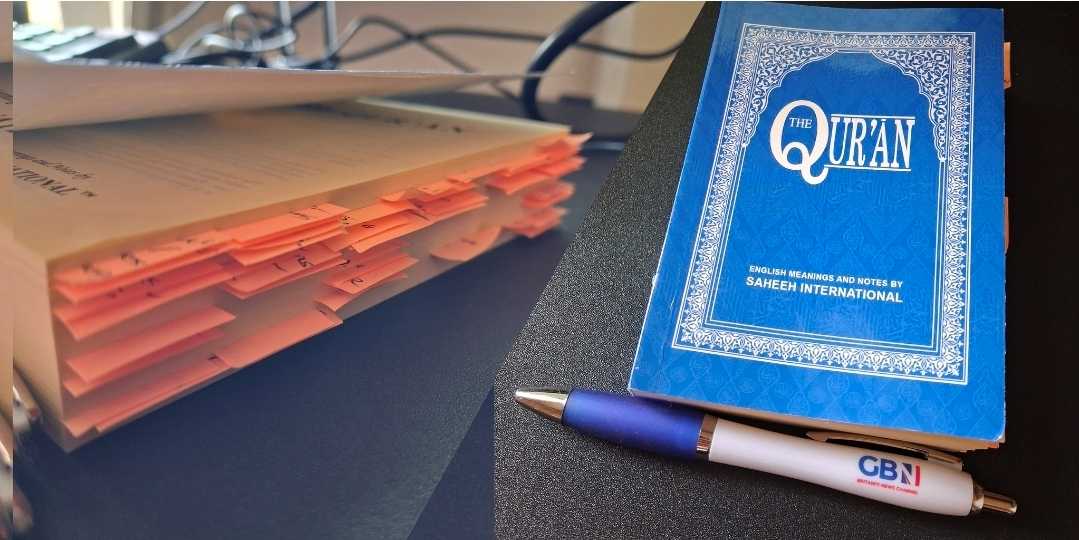
In summer of 2024, I was given a free copy of The Qur’an on the streets of Leeds by a Muslim preacher. I took this in good faith, with the intent to explore further. What I have found so far is illuminating.
For context, I have lived, worked and socialised with British Muslims all of my life. I have had and continue to have some great friends. I have in the past worked publicly on community cohesion projects in places like Bradford, Burnley and elsewhere.
This piece here is not an indictment of these people. However the passages that I have identified with relative ease, do seem to explain some of the more commonly held attitudes, behaviours, feuds and expressions of beliefs that I have recognised as a solid and consistent pattern within Islam and its various communities. And it is logical to engage in pattern recognition and thus seek context from the sacred teachings/instructions for any religious community.
Important to note: I am categorising this under ‘Religious Studies and not ‘Culture War’.
Let’s begin…
Abrogation
So, understanding how abrogation works is crucial. But don’t take my word for it, the Qur’an itself explains:
Abrogation (naskh) in the Quran is the idea that when two verses appear to contradict each other on a ruling (like a law or command), the later-revealed verse cancels or replaces the earlier one.
See yaqeeninstitute.org for further context
So as far as any simple explanation goes, The Quran was revealed gradually over about 23 years, often in response to changing situations for the early Muslim community.
Allah can replace a previous command with a new one that is better or more suitable (as stated in Quran 2:106: “We do not abrogate a verse or cause it to be forgotten except that We bring forth one better than it or similar to it”).
Key rule: The newer verse (later in time) takes priority and “abrogates” (overrides) the older one. The older verse stays in the Quran as part of the holy text, but its ruling no longer applies in practice. Again see yaqeeninstitute.org for clarification.
This allows gradual changes in laws — for example, starting with easier or temporary rules, then moving to stricter or final ones as Islam became more violent and… ultimately… successful in spreading (by the sword).
For example see an early verse during the Meccan period and you overwhelmingly read about tolerance toward non-believers, like “To you your religion, to me mine.” However later verses (Medinan period, after conflicts) you will overwhelmingly read commands for fighting.
It is a basic concept to grasp. Later revelation cancels the earlier ruling on that specific matter. If I was to tell you: “Pick up the ball…. now put the ball on the ground”, after hearing my words ultimately the ball should now be on the ground, because that’s how communication and instructions works.
It doesn’t help that the passages of the entire book are in worse chronological order than a Quentin Tarantino movie. It is a jumbled mess. But knowing from the story of the life of Mohammed, that the Qu’ran began with peace and tolerance and later descended into war with the non-believers, death, looting and slavery (and the rest), it is safe to say that the later passages containing the horrendous entries are the ones to be followed. Regardless of where they are positioned in the version that you are reading.
This gives the ‘only in your Islamophobic interpretation’ (and/or the interpretation of ‘extreme Islamists’) argument a bit of a puncture. This is the interpretation as per the book itself. The harsher entries take priority, through abrogation. This is not just our interpretation, or focusing on the negative parts.
The Passages
Now I shall list the entries that I flagged as I read the book, given to me on the streets of Leeds in the summer of 2024. This study will be elaborated on and updated over time. But for now these are the entries by number. Below this (for now) are the English translations by Dr. Mustafa Khattab from Quran.com.
- 2:106
- 2:221
- 2:256
- 3:28
- 4:3
- 4:24
- 4:34
- 4:64 One to note as cancelled/abrogated by verse 9:80 and 63:6
- 4:56
- 4:74
- 4:84
- 4:89
- 4:95
- 5:32-33
- 5:51
- 5:72-73
- 7:4
- 8:12-17
- 8:41
- 8:54-57
- 8:65-7
- 9:5
- 9:12-14
- 9:26
- 9:29
- 9:36
- 9:55
- 9:74
- 9:80
- 9:88
- 9:111
- 9:122
- 9:123
- 17:33
- 23:5-6
- 24:2
- 24:33
- 24:55
- 30:28
- 33:16
- 33:21-27
- 33:33
- 33:50
- 33:59
- 33:61
- 48:28
- 59:2
- 59:14
- 63:6
- 64:9
- 65:4
- 66:9
- 98:6
Here are the above Qur’an verses (using the clear, modern English translation by Dr. Mustafa Khattab from Quran.com):
2:106
If We ever abrogate a verse or cause it to be forgotten, We replace it with a better or similar one. Do you not know that Allah is Most Capable of everything?
2:221
Do not marry polytheistic women until they believe; for a believing slave-woman is better than a free polytheist, even though she may look pleasant to you. And do not marry your women to polytheistic men until they believe, for a believing slave-man is better than a free polytheist, even though he may look pleasant to you. They invite ˹you˺ to the Fire while Allah invites ˹you˺ to Paradise and forgiveness by His grace. He makes His revelations clear to the people so perhaps they will be mindful.
2:256
Let there be no compulsion in religion, for the truth stands out clearly from falsehood. So whoever renounces false gods and believes in Allah has certainly grasped the firmest, unfailing hand-hold. And Allah is All-Hearing, All-Knowing.
3:28
Believers should not take disbelievers as guardians instead of the believers—and whoever does so will have nothing to hope for from Allah—unless it is a precaution against their tyranny. And Allah warns you about Himself. And to Allah is the final return.
4:3
If you fear you might fail to give orphan women their ˹due˺ rights ˹if you were to marry them˺, then marry other women of your choice—two, three, or four. But if you are afraid you will fail to maintain justice, then ˹content yourselves with˺ one or those ˹bondwomen˺ in your possession. This way you are less likely to commit injustice.
4:24
Also ˹forbidden are˺ married women—except ˹female˺ captives in your possession. This is Allah’s commandment to you. Lawful to you are all beyond these—as long as you seek them with your wealth in a legal marriage, not in fornication. Give those you have consummated marriage with their due dowries. It is permissible to be mutually gracious regarding the set dowry. Surely Allah is All-Knowing, All-Wise.
4:34
Men are the caretakers of women, as men have been provisioned by Allah over women and tasked with supporting them financially. And righteous women are devoutly obedient and, when alone, protective of what Allah has entrusted them with. And if you sense ill-conduct from your women, advise them ˹first˺, ˹if they persist,˺ do not share their beds, ˹but if they still persist,˺ then discipline them ˹gently˺. But if they change their ways, do not be unjust to them. Surely Allah is Most High, All-Great.
4:64
We only sent messengers to be obeyed by Allah’s Will. If only those ˹hypocrites˺ came to you ˹O Prophet˺—after wronging themselves—seeking Allah’s forgiveness and the Messenger prayed for their forgiveness, they would have certainly found Allah ever Accepting of Repentance, Most Merciful.
4:56
Surely those who reject Our signs, We will cast them into the Fire. Whenever their skin is burnt completely, We will replace it so they will ˹constantly˺ taste the punishment. Indeed, Allah is Almighty, All-Wise.
4:74
Let those who would sacrifice this life for the Hereafter fight in the cause of Allah. And whoever fights in Allah’s cause—whether they achieve martyrdom or victory—We will honour them with a great reward.
4:84
So fight in the cause of Allah ˹O Prophet˺. You are accountable for none but yourself. And motivate the believers ˹to fight˺, so perhaps Allah will curb the disbelievers’ might. And Allah is far superior in might and in punishment.
4:89
They wish you would disbelieve as they have disbelieved, so you may all be alike. So do not take them as allies unless they emigrate in the cause of Allah. But if they turn away, then seize them and kill them wherever you find them, and do not take any of them as allies or helpers.
4:95
Those believers who stay at home—except those with valid excuses—are not equal to those who strive in the cause of Allah with their wealth and their lives. Allah has elevated in rank those who strive with their wealth and their lives above those who stay behind ˹with valid excuses˺. Allah has promised each a fine reward, but those who strive will receive a far better reward than others—
5:32-33
32: That is why We ordained for the Children of Israel that whoever takes a life—unless as a punishment for murder or mischief in the land—it will be as if they killed all of humanity; and whoever saves a life, it will be as if they saved all of humanity. ˹Although˺ Our messengers already came to them with clear proofs, many of them still transgressed afterwards through the land.
33: Indeed, the penalty for those who wage war against Allah and His Messenger and spread mischief in the land is death, crucifixion, cutting off their hands and feet on opposite sides, or exile from the land. This ˹penalty˺ is a disgrace for them in this world, and they will suffer a tremendous punishment in the Hereafter.
5:51
O believers! Take neither Jews nor Christians as guardians—they are guardians of each other. Whoever does so will be counted as one of them. Surely Allah does not guide the wrongdoing people.
5:72-73
72: Those who say, “Allah is the Messiah, son of Mary,” have certainly fallen into disbelief. The Messiah ˹himself˺ said, “O Children of Israel! Worship Allah—my Lord and your Lord.” Whoever associates others with Allah ˹in worship˺ will surely be forbidden Paradise by Allah. Their home will be the Fire. And the wrongdoers will have no helpers.
(For 73, it continues the theme of disbelief regarding the Trinity.)
7:4
˹Imagine˺ how many societies We have destroyed! Our torment took them by surprise ˹while sleeping˺ at night or midday.
8:12-17 (key excerpts for context):
12: ˹Remember, O Prophet,˺ when your Lord revealed to the angels, “I am with you. So make the believers stand firm. I will cast horror into the hearts of the disbelievers. So strike their necks and strike their fingertips.”
13: This is because they defied Allah and His Messenger. And whoever defies Allah and His Messenger, then ˹know that˺ Allah is surely severe in punishment.
(The surrounding verses discuss the Battle of Badr and fighting disbelievers.)
8:41
Know that whatever spoils you take, one-fifth is for Allah and the Messenger, his close relatives, orphans, the poor, and ˹needy˺ travellers, if you ˹truly˺ believe in Allah and what We revealed to Our servant on that decisive day when the two armies met ˹at Badr˺. And Allah is Most Capable of everything.
8:54-57
54: That was the case with Pharaoh’s people and those before them—they all rejected the signs of their Lord, so We destroyed them for their sins and drowned Pharaoh’s people. They were all wrongdoers.
(The context warns about similar fates for disbelievers.)
8:65-67
65: O Prophet! Motivate the believers to fight. If there are twenty steadfast among you, they will overcome two hundred. And if there are one hundred of you, they will overcome one thousand of the disbelievers, for they are a people who do not comprehend.
9:5
But once the Sacred Months have passed, kill the polytheists ˹who violated their treaties˺ wherever you find them, capture them, besiege them, and lie in wait for them on every way. But if they repent, perform prayers, and pay alms-tax, then set them free. Indeed, Allah is All-Forgiving, Most Merciful.
9:12-14
12: But if they break their oaths after making a pledge and attack your faith, then fight the champions of disbelief—who never honour their oaths—so perhaps they will desist.
9:29
Fight those who do not believe in Allah and the Last Day, nor comply with what Allah and His Messenger have forbidden, nor embrace the religion of truth from among those who were given the Scripture, until they pay the tax, willingly submitting, fully humbled.
9:111
Allah has indeed purchased from the believers their lives and wealth in exchange for Paradise. They fight in the cause of Allah and kill or are killed. This is a true promise binding on Him in the Torah, the Gospel, and the Quran. And whose promise is truer than Allah’s? So rejoice in the exchange you have made with Him. That is ˹truly˺ the ultimate triumph.
- Additional verses (summarized for brevity; full texts follow similar patterns of guidance, warnings, or rulings): 9:26, 9:36, 9:55, 9:74, 9:80, 9:88, 9:122, 9:123: Themes of divine support, fighting in Allah’s cause, and consequences for hypocrites/disbelievers.
- 17:33: On the sanctity of life (retaliation for murder).
- 23:5-6: Believers who guard their chastity (except with spouses or bondwomen).
- 24:2, 24:33, 24:55: Punishments for adultery, marriage of slaves, and promises to believers.
- 30:28, 33:16, 33:21-27, 33:33, 33:50, 33:59, 33:61: Examples, Prophet’s conduct, rulings on women, and treatment of hypocrites.
- 48:28: Religion of truth prevailing over all.
- 59:2, 59:14: Expulsion of disbelievers and their disunity.
- 63:6, 64:9, 65:4, 66:9, 98:6: Warnings to hypocrites, rewards/punishments, and description of disbelievers as worst of creatures.
Further updates to follow as research continues…
– BrandX
Acknowledgements

Alongside weekly analytical videos, Beyond Belief hosts long-form conversations with thinkers, activists, and public figures who have influenced or challenged Britain’s political and cultural trajectory.
This channel is committed to intellectual honesty, open inquiry, and serious discussion in an era increasingly defined by fear, conformity, and the narrowing of public debate.