
The below is based on the works of American writer and social commentator, Rob Henderson. You can check out his key work via the following link

Luxury beliefs explained
The concept of ‘luxury beliefs’ was coined by Rob Henderson in 2019 and describes ideas and opinions that (in perception) confer social status on the upper class or highly educated elite while (in truth) it imposes its real costs on lower socioeconomic groups.
A defining feature is that those who hold and promote these beliefs are typically sheltered from their practical consequences. Quite a sinister dynamic.
The evolution of luxury goods to luxury beliefs
Historically, elites signaled status through material means, a phenomenon analyzed by economist and sociologist Thorstein Veblen in ‘The Theory of the Leisure Class’ (1899). Conspicuous consumption (e.g. expensive clothing, leisure, servants, or rare objects) demonstrated that one could afford wasteful or impractical expenditures. French sociologist Pierre Bourdieu later expanded related ideas through the notion of cultural capital: tastes, knowledge, manners, and credentials that mark class distinction.
In modern wealthy societies, many material markers have become less reliable signals. Mass production and rising living standards, the tempting ability to (often irresponsibly) ‘Buy Now and Pay Later’ make certain goods more widely available, diluting their exclusivity. Status-seeking therefore migrates toward the realm of ideas. Luxury beliefs function as a new form of cultural capital. Holding or articulating them demonstrates education, moral sophistication, or alignment with fashionable elite discourse, often acquired through expensive universities or professional environments.
Expressing the “correct” unconventional view becomes a way of distinguishing oneself from the mainstream or working classes.
But unlike the expense of high value ‘luxury goods’ coming at the cost to yourself… ‘luxury beliefs’ are left to other, less fortunate people, to foot the bill. I say again, quite a sinister dynamic.
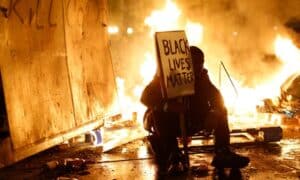
For example ‘Defund The Police’.
Many high-profile, wealthy advocates of “defund the police” in 2020 did so from positions of extreme personal security that insulated them from the practical results of reduced policing. After the killing of George Floyd, a wave of leftist politicians, celebrities, academics, and media figures amplified calls to slash police budgets, reallocate funds, or in some cases abolish departments entirely. These voices were disproportionately drawn from affluent, highly protected environments, gated communities, private security details, doormen-guarded high-rises, or neighborhoods with rapid private-response options, where street crime was already rare and the social costs of lower enforcement fell elsewhere.
Concrete examples illustrate the pattern. In Minneapolis, where the City Council’s majority publicly embraced dismantling the police department, several of those same officials lived in safer, more affluent wards or quickly sought private security once disorder spread. Nationally, celebrities who tweeted support for defunding often resided behind gates or with 24-hour protection; some later quietly increased their own security spending while neighborhoods that actually lost officers saw measurable rises in homicide and property crime.
The ideological preference was advanced by people whose daily lives were buffered by wealth, private guards, and geographic distance from the communities that experienced the sharpest consequences when response times lengthened and proactive policing contracted. This gap between rhetoric and lived risk is what critics highlighted as performative rather than experiential.
Coining the term ‘luxury beliefs’
Henderson, who rose from a difficult childhood involving foster care and military service to attend Yale and later complete a PhD at Cambridge, developed the idea from personal observation. At elite universities he encountered peers who espoused progressive or unconventional views—often with little apparent personal risk—while living lives insulated by wealth, networks, and stable family backgrounds. He formalised the term to capture how status competition has evolved in contemporary affluent societies.
Core characteristics
According to Henderson, luxury beliefs share several traits:
- They raise the social standing of the believer, particularly within elite circles.
- Their adoption or advocacy carries low personal cost for the affluent, who can buffer negative outcomes through private security, better neighborhoods, financial resources, or social capital.
- When scaled or acted upon more broadly, they frequently harm people with fewer resources, for example those living in higher-crime areas, relying on public institutions, or lacking the same safety nets.
Other examples Henderson and others have discussed besides strong advocacy for defunding or abolishing police (while living in low-crime areas) as above, include downplaying the importance of two-parent family structures (despite evidence of their benefits for children’s outcomes), broad drug decriminalisation or legalisation, highly permissive sexual norms, or certain uses of concepts such as “white privilege.”
The point is not that every progressive or leftist idea is a luxury belief, nor that elites never face any costs; rather, the asymmetry of impact is central. The believer enjoys the prestige of the opinion while others disproportionately bear the downstream effects.
Henderson emphasises that many holders of these beliefs are sincere rather than purely cynical. Still, the social rewards, approval, career advantages, moral self-regard, encourage their spread, particularly in environments where conformity to certain ideological markers is valued.
Broader implications
The framework highlights a form of elite hypocrisy or disconnect: people may promote policies or cultural norms they would not fully apply to their own children or communities. It also explains why certain ideas flourish in universities, media, and professional classes even when polling shows weaker support among working-class populations. Luxury beliefs can crowd out more pragmatic or evidence-based approaches that lack the same status payoff.
Critics note that the term is sometimes applied loosely as a rhetorical weapon against any disliked progressive view, and that some ideas once confined to elites later become widely accepted improvements. Henderson’s original formulation, however, focuses specifically on the status-conferring function combined with asymmetric costs. It remains a useful lens for examining how cultural capital operates in an era when traditional material displays have lost some of their signaling power.
In short, luxury beliefs are the ideological counterpart of luxury goods: costly (or at least distinctive) to acquire and display in the right circles, yet capable of imposing burdens on those who cannot afford the same insulation from consequences. Rob Henderson’s concept offers a clear vocabulary for analyzing this modern form of status competition and its social effects.
– BrandX