

In the Middle Ages, particularly during the intense periods of witch hunts in Europe from the 15th to 17th centuries, the accusation of witchcraft served as a powerful social and political weapon. To be called a witch required no rigorous evidence by modern standards—often mere rumor, a neighbor’s grudge, an unexplained misfortune, or failure to conform to prevailing religious or social norms sufficed.
Confessions extracted under torture, spectral evidence (dreams or visions), or the flimsiest circumstantial claims could lead to trials, ostracism, or execution. The label “witch” was elastic, encompassing herbal healers, independent widows, the eccentric, or political rivals. Authorities—church inquisitors, local magistrates, and monarchs—frequently deployed it to consolidate power, eliminate dissent, settle scores, or redirect public anxiety toward convenient scapegoats.
Today, the accusation of being “far right” functions in a strikingly parallel manner within segments of Western media, academia, and political discourse. The term has expanded far beyond its original meaning of advocating authoritarian nationalism, racial supremacy, or violent extremism. It is now routinely applied to classical liberals, immigration skeptics, gender-critical feminists, defenders of free speech, or anyone questioning rapid cultural or demographic change. Like the witch label, it often demands scant hard evidence: a misinterpreted tweet, attendance at a protest, association with the “wrong” thinkers, or deviation from institutional consensus can trigger the charge. Definitions remain conveniently vague, allowing the label to stretch to encompass figures like populist politicians, traditional Christians, or even center-right economists.
Observe below, the abuse and accusations levied at myself some time ago, for stating that primary schools pushing kink Pride and gender ideology on young children was creepy, sleazy and inappropriate…
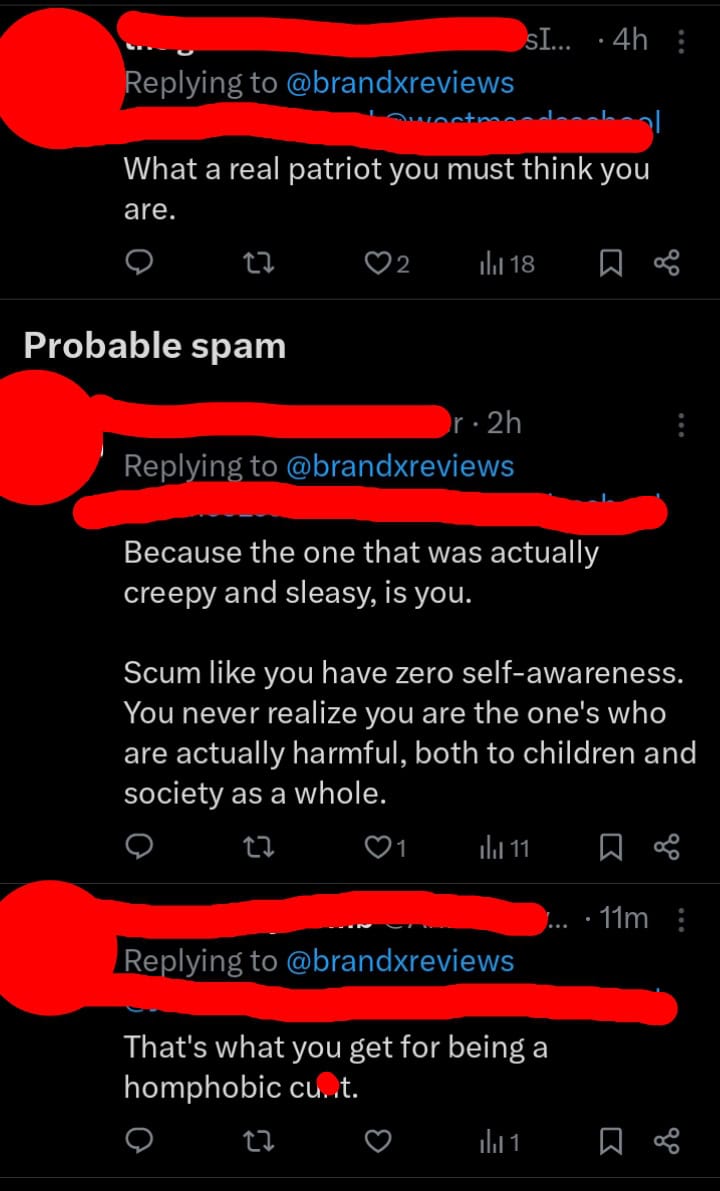
This rhetorical tactic serves similar purposes to its medieval predecessor. It acts as a mechanism for authorities—broadly understood as influential elites in government, corporations, NGOs, and legacy media, to sideline independent inconvenient voices without engaging their arguments.
Labeling someone “dangerous”, “homopobic”, “harmful to children and society” and other associated “far right” terms can justify deplatforming, professional ruin, surveillance, or social exclusion, much as witchcraft accusations enabled property seizures or the removal of community nuisances.
It transforms policy disagreement into moral panic, framing dissent as existential evil rather than legitimate debate. Just as witch hunts thrived amid social upheaval (plagues, wars, religious schisms), the proliferation of “far right” smears has intensified during eras of globalization, migration crises, technological disruption, and declining trust in institutions. It channels public frustration away from complex problems toward designated heretics.
Of course, the analogy is imperfect. Modern consequences are rarely lethal, even if the desire to see thinkers such as myself end up like Charlie Kirk is disturbingly common and out in the open. The harms are typically more along the lines of job loss, censorship, or targeted harassment.
Actual far-right extremism, neo-Nazism, political violence, exists and merits condemnation with evidence, just as genuine maleficium (harmful sorcery) was a concern in the past. The danger lies in the dilution and weaponisation of the term, which erodes the ability to identify real threats while chilling speech. When evidence becomes secondary to narrative, and institutional power determines guilt by association, societies risk repeating historical patterns of intolerance.
Ultimately, both the witch and the “far right” label reveal a recurring human tendency: the urge to simplify complexity through demonisation. Restoring rigorous standards of evidence, precise language, and open debate remains essential to preventing moral panics from undermining the very freedoms that distinguish open societies from their medieval counterparts.
– BrandX