
On September 10, 2025, at Utah Valley University, a sniper’s bullet ended the life of Charlie Kirk, the 31-year-old founder of Turning Point USA, as he spoke at an outdoor campus event. A single shot to the neck from a bolt-action rifle, fired from a rooftop roughly 142 yards away.
What followed was not merely shock or partisan mourning. It was a cultural X-ray. In the hours and days after the assassination, segments of the left, particularly its identitarian and academic wings, revealed something primal: a willingness not just to disagree, but to rejoice in the elimination of a political opponent.
At Brand X Reviews, we talked about this in the immediate aftermath and showed examples. Make no mistake about it, these people want us dead. If not by their own hands, then by the hands of their ‘allies’.
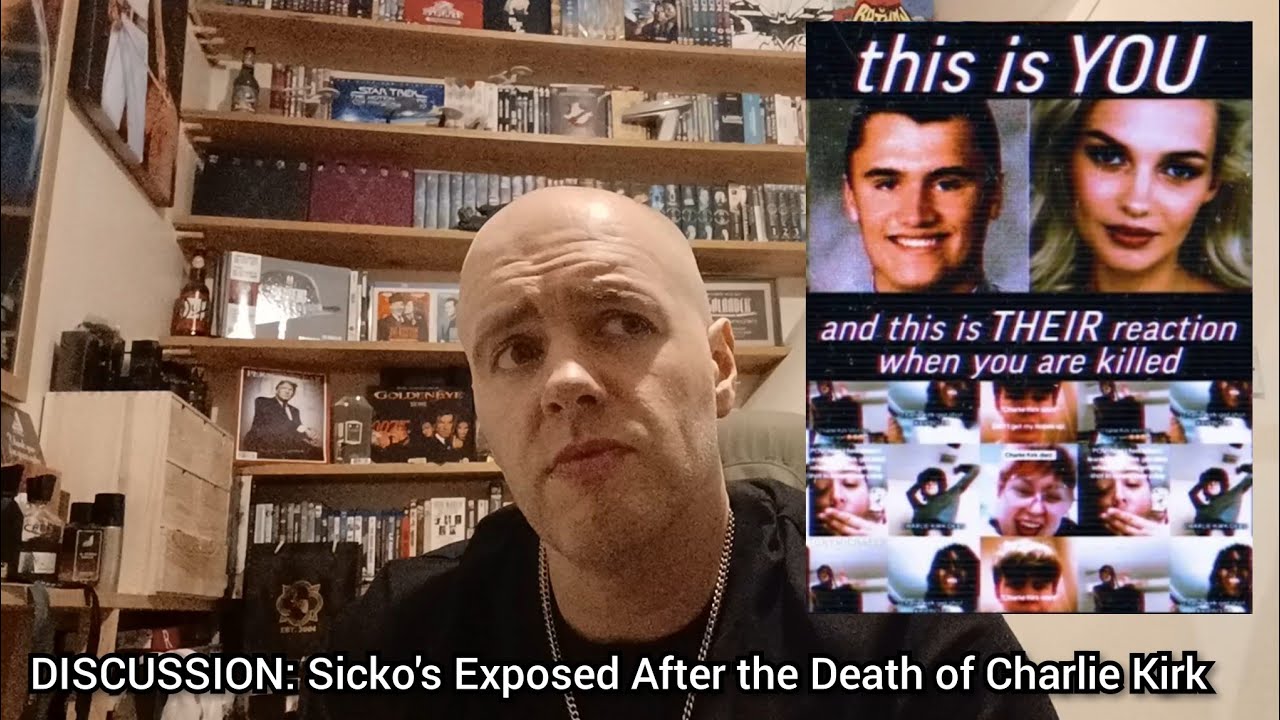
Brand X Reviews
Celebration parties. “Good riddance” posts. Memes. Teachers and professors posting glee. TikTok dances and Bluesky threads framing the murder as poetic justice. Stanford students, in elite echo chambers, toasted with open drunken posts about “Charlie Kirk celebration parties.”
This was not fringe noise. It was widespread enough to trigger a wave of firings: educators, airline pilots, federal employees, and others disciplined for public endorsements of the killing. Surveys captured the rot—polls showed around 20% of Democrats, and nearly a third of those under 30, viewing the murder as justified.
Vice President JD Vance and others called for accountability, rightly noting that glorifying political assassination corrodes the republic.
The Dehumanizing Lens
The reaction exposed the logical endpoint of certain strains of thought: identitarian Marxism fused with postmodern moral inversion. In this worldview, politics is not contestation between citizens who share a polity; it is a Manichaean struggle between oppressors and oppressed, where the former—defined by ideology, race, gender, or “whiteness” adjacent conservatism—exist outside the circle of basic human dignity. Charlie Kirk, with his brash defense of free markets, traditional values, campus free speech, and skepticism of woke orthodoxies, was cast as the archetypal villain: a “fascist,” a “MAGA troll,” a spreader of “hate.”
Once labeled as such, his death becomes not tragedy but catharsis. Some leftist commentators and academics framed it through the lens of “chickens coming home to roost”—implying Kirk’s rhetoric on guns, culture, or Israel somehow invited the bullet. Marxist outlets debated individual terror while critiquing Kirk as a servant of capital. Identitarian voices, steeped in critical theory, saw the assassin as an avatar of the oppressed striking back.
This is the true color: a moral inversion where empathy is selectively rationed. The same voices decrying “stochastic terrorism” from the right suddenly found nuance when the target was a conservative youth organizer. The assassin’s own words—“I had enough of his hatred. Some hate can’t be negotiated out”—echoed the dehumanizing rhetoric long directed at Kirk.
Art as Mirror
Art has always thrived on rupture. Think Goya’s Disasters of War, exposing the savagery beneath Enlightenment pretensions. Or Orwell’s 1984, dissecting how language and tribal loyalty warp truth. The aftermath of Kirk’s death functions as modern political art—raw, unflattering, performative.
It revealed the hollowness of performative tolerance. Academia, long a supposed bastion of open inquiry, hosted open revelry. Public school teachers—tasked with shaping young minds—posted variations of “good riddance to bad garbage,” complete with Nazi analogies and gloating.
This is not robust debate; it is bloodlust dressed in the language of justice. Identitarian Marxism, with its oppressor/oppressed dialectic, provides the intellectual scaffolding: if Kirk embodied systemic harm, then violence against him is reframed as resistance, not barbarism.
The celebrations laid bare the substitution of moral reasoning with aesthetic tribal signaling. Death becomes a meme. Assassination a flex. The family left behind—Kirk’s wife Erika and their young children—reduced to collateral in the great narrative.
The Broader Corrosion
Political violence has precedents across the spectrum, and condemnation must be consistent. But the scale and openness of the post-assassination glee on one side signal a deeper sickness: the erosion of the liberal democratic norm that even your fiercest foe retains basic humanity. When “punch a Nazi” rhetoric (with ever-expanding definitions of Nazi) meets actual bullets, the mask slips entirely.
Kirk built Turning Point USA to engage young people in ideas—often messy, provocative ones. He debated opponents publicly. His killing, and the celebration thereof, underscore a rejection of that arena in favor of eliminationist fantasy. Some on the right have their own excesses and conspiracy spirals; dehumanisation is not a left-only vice. But the institutional capture—universities, media corners, activist subcultures—amplified this particular reaction in ways that demand reckoning.
In the chiaroscuro of this tragedy, the light and shadow clarified something essential. The left’s radical fringes did not hide their id. They danced in the street—digitally, professionally, academically. That image, grotesque and revealing, is the art: a portrait of a faction that has traded persuasion for purification, dialogue for deletion.
We are left with a choice as a society. Mourn the man, condemn the act unequivocally, and reject the celebration of corpses as political victory. Or descend further into the zero-sum abyss where “some hate can’t be negotiated out” becomes the operating principle for all sides. The bullet revealed one man’s mortality. The aftermath revealed a movement’s soul.
– BrandX